
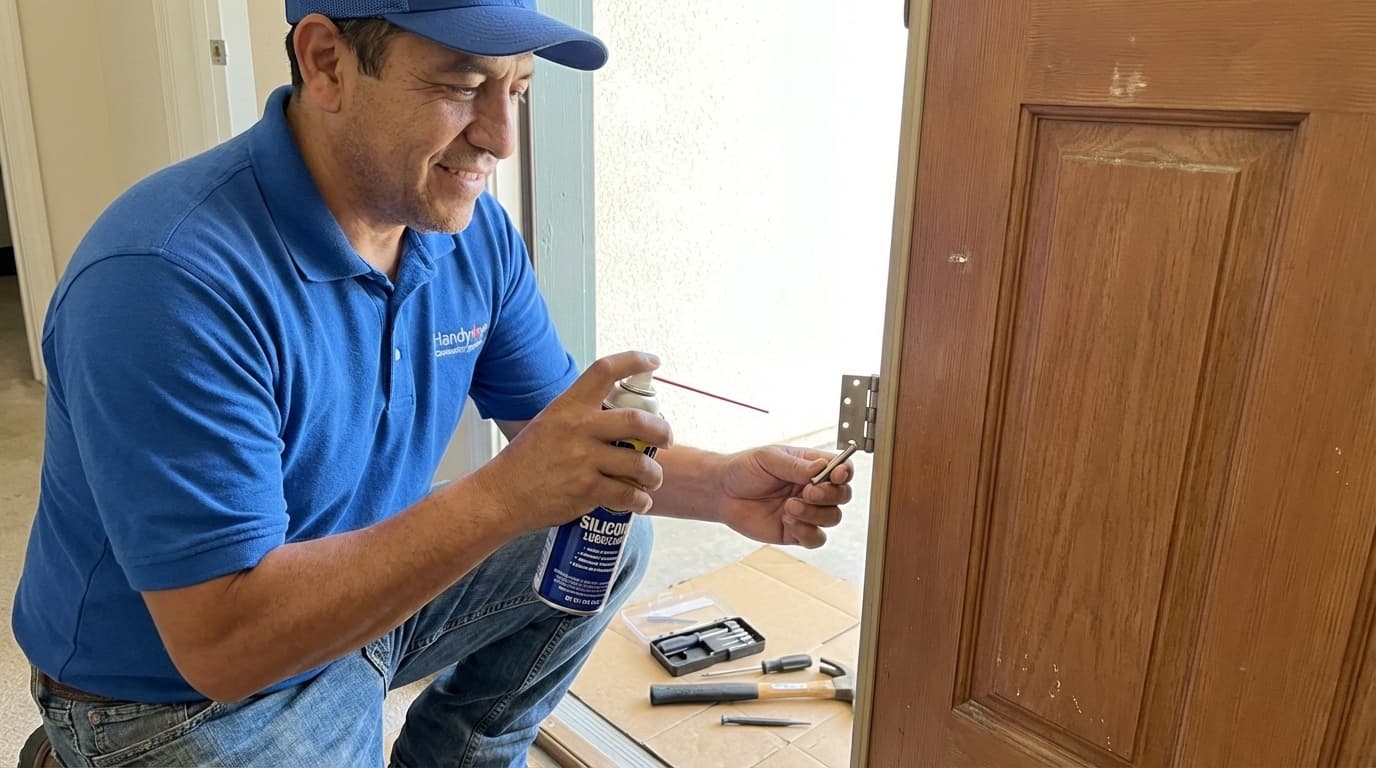
Every homeowner eventually encounters the annoying sound of a wooden door that refuses to open quietly or close smoothly. Dealing with these minor household nuisances is a core part of being a handy homeowner who takes pride in maintenance. Handydads understands that even a small squeak can become a daily source of frustration for your family. Fixing these issues usually requires only basic tools and a little bit of patience during the weekend. By addressing these door problems early on you can prevent more significant structural damage to your frames or hinges.
Project Snapshot
- Difficulty: Easy
- Time: 30 minutes
- Cost: Under 15 dollars
Tools and Materials
- Screwdriver set
- Silicone lubricant or WD-40
- Fine-grit sandpaper
- Hammer and nail set
- Wood shims
- Clean rag
Step-by-Step Instructions
- Identify the source of the noise or resistance by opening and closing the door several times slowly.
- Lubricate the hinge pins by removing them with a hammer and nail set then cleaning off old gunk.
- Apply a thin layer of silicone lubricant to the pin before sliding it back into the hinge barrel.
- Tighten any loose screws on the hinge plates to ensure the door is hanging perfectly square.
- Sand down any high spots on the door edge if the wood is rubbing against the frame.
From the Toolbox
I remember a time when a client called Handydads because their nursery door was so loud it woke the baby every night. The solution was remarkably simple but it made a massive difference in their daily quality of life. We simply cleaned the decade of dust out of the hinges and applied a drop of high-quality oil. Seeing the look of relief on those tired parents faces reminded me why we do this work. Sometimes the smallest repairs have the biggest impact on how a home feels to the people living inside.
Top 5 Mistakes
- Using heavy grease that attracts dust and dirt over time.
- Over-sanding the door which creates unsightly gaps and drafts.
- Forgetting to check if the floor is level before adjusting the door.
- Stripping the screw holes by over-tightening them into soft wood.
- Ignoring the strike plate alignment which often causes sticking issues.
Tool and Material Recommendations
Use a high-quality dry silicone spray for the hinges to avoid messy drips on your carpet. A pack of assorted sandpaper grits is always useful for smoothing out rough wooden edges. Make sure you have a solid hammer that allows for precision when tapping out the hinge pins. Stainless steel screws are a great choice if you need to replace old hardware for better grip. Handydads recommends keeping a small bottle of wood glue nearby for filling stripped screw holes.
Quick Tips and Hacks
- Rub a bit of dry soap on the edge of the door to reduce friction temporarily.
- If a screw hole is stripped you can shove a few toothpicks in with glue to give the screw a new surface to bite into.
- Always place a piece of cardboard under the hinges when spraying lubricant to catch any excess liquid.
- Use a pencil to mark exactly where the door is rubbing against the frame before you start sanding.
- Check your hinge alignment with a level to ensure the door stays in place when left halfway open.