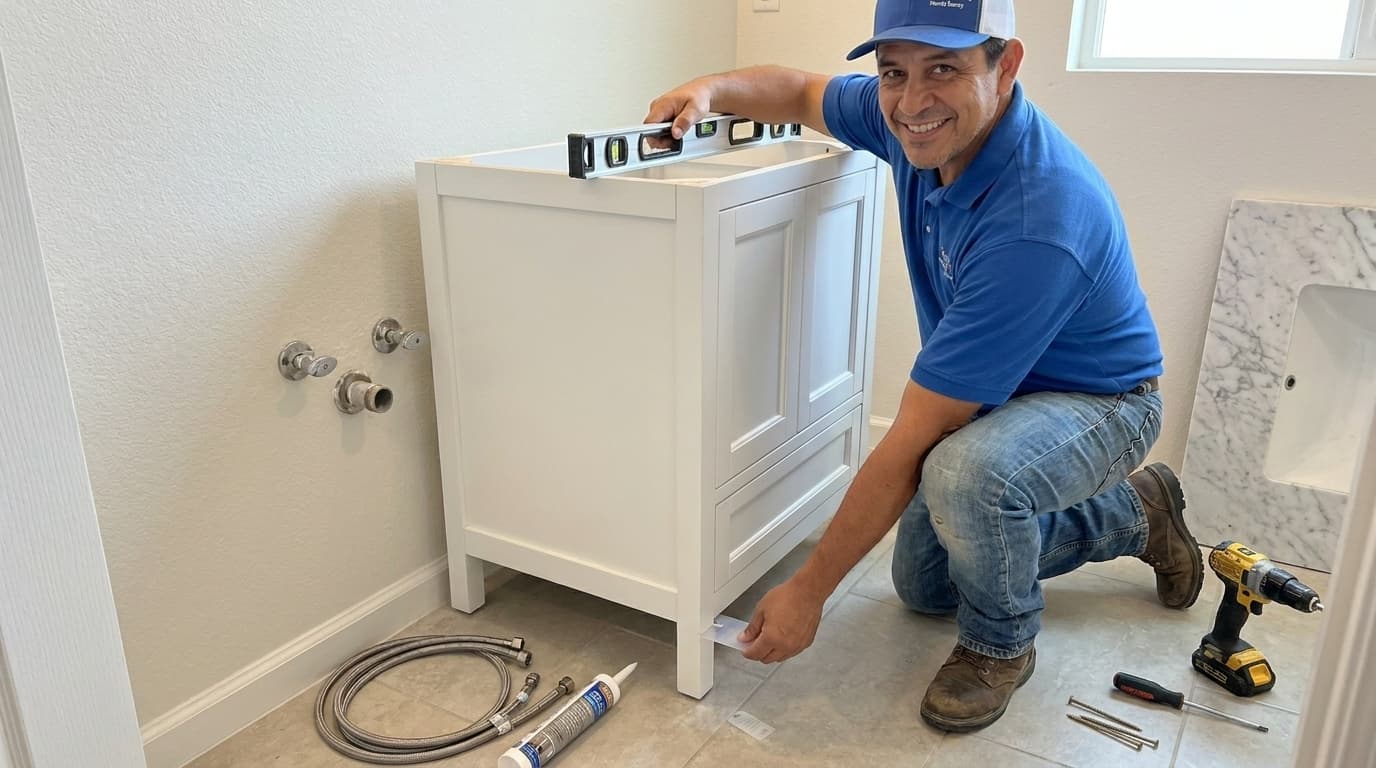
Upgrading your bathroom with a new freestanding vanity and faucet is one of the most impactful home improvement projects you can undertake. This transformation not only refreshes the overall look of your space but also provides better storage and improved functionality for your daily routine. Many homeowners feel intimidated by plumbing connections, but the process is straightforward when you follow the right sequence of steps. Handydads recommends taking your time to ensure everything is level and leak-proof for a professional result that lasts for years. By doing this work yourself, you gain a sense of accomplishment and a deeper understanding of your home plumbing systems.\n\n## Project Snapshot\nThis project involves removing an old cabinet, preparing the wall surface, and installing a new unit with integrated plumbing fixtures. You will need to handle basic water supply connections and drain assembly while ensuring the vanity is securely fastened to the wall. Expect this task to take several hours depending on the complexity of your current plumbing layout and the weight of the new furniture. It is a rewarding intermediate-level project that significantly boosts the aesthetic value of any master or guest bathroom. Handydads suggests having a helper nearby to assist with lifting the heavy vanity base into its final position.\n\n## Tools and Materials\nYou will need a new freestanding vanity unit, a matching faucet kit, and a pop-up drain assembly to complete this installation. Common tools include an adjustable wrench, a set of screwdrivers, a bubble level, and a caulk gun with high-quality silicone. You should also have a bucket and rags ready to catch any residual water from the old pipes during the removal process. Teflon tape and plumbers putty are essential for creating watertight seals on the threaded connections and the sink basin. Finally, ensure you have long enough flexible supply lines to reach from the shut-off valves to your new faucet.\n\n## Step-by-Step Instructions\nBegin by turning off the water supply valves under the sink and disconnecting the old faucet lines and the P-trap assembly. Carefully remove the old vanity from the wall after cutting any existing caulk or adhesive with a utility knife. Position your new freestanding vanity against the wall and use your bubble level to ensure it sits perfectly flat on the floor. If the floor is uneven, use plastic shims under the legs or base until the unit is level in both directions. Drill pilot holes into the wall studs and secure the vanity cabinet using long wood screws to prevent it from shifting during use. Install the faucet and drain onto the vanity top before placing the top on the cabinet to make the plumbing work much easier. Apply a bead of silicone along the top edge of the cabinet, set the vanity top in place, and then connect the water supply lines and the drain trap to complete the assembly.\n\n## From the Toolbox\nOne Saturday morning, the Handydads team helped a neighbor who had purchased a beautiful marble-top vanity that was simply too heavy to move alone. We arrived with moving straps and a plan to navigate the narrow hallway leading to the guest bathroom. After successfully positioning the unit, we discovered the wall was significantly bowed, leaving a large gap behind the backsplash. We used a scribe tool to match the curve of the wall onto a small piece of trim for a custom fit. The neighbor was thrilled with the final look, and it reminded us that every home has its own unique structural quirks.\n\n## Top 5 Mistakes\nMany DIYers forget to check the alignment of the vanity with the existing plumbing valves before they begin the installation. Another common error is over-tightening the plastic nuts on the P-trap, which can lead to cracks and slow leaks over time. Some people fail to use a level, resulting in a sink that drains poorly or looks crooked against the wall tiles. Forgetting to apply Teflon tape to the threaded pipe ends is a recipe for drips that can damage your new cabinet interior. Lastly, failing to secure the vanity to wall studs can make the unit unstable and potentially dangerous for small children who might lean on it.\n\n## Tool and Material Recommendations\nA high-quality adjustable wrench is your best friend when working with various sizes of nuts on the supply lines. Handydads prefers using clear or white kitchen and bath silicone that contains antimicrobial properties to prevent mold growth around the sink. A stud finder is indispensable for locating the structural framing behind the drywall for a secure vanity attachment. Flexible braided stainless steel supply lines are much easier to work with than rigid plastic or copper pipes. Investing in a small basin wrench will also help you tighten faucet nuts in those tight spaces behind the sink bowl.\n\n## Quick Tips and Hacks\nLay a thick towel inside the cabinet before you start plumbing to catch any minor drips and provide a soft surface for your tools. If you have a small gap between the vanity and the wall, use a decorative backer rod before applying your final bead of caulk for a cleaner finish. You can use a bit of dish soap on your finger to smooth out the silicone bead for a perfectly professional look. Always test the faucet by running both hot and cold water for several minutes while checking the connections below with a dry paper towel. Keep a small flashlight handy so you can clearly see the threads and seals at the back of the cabinet during the final inspection.