
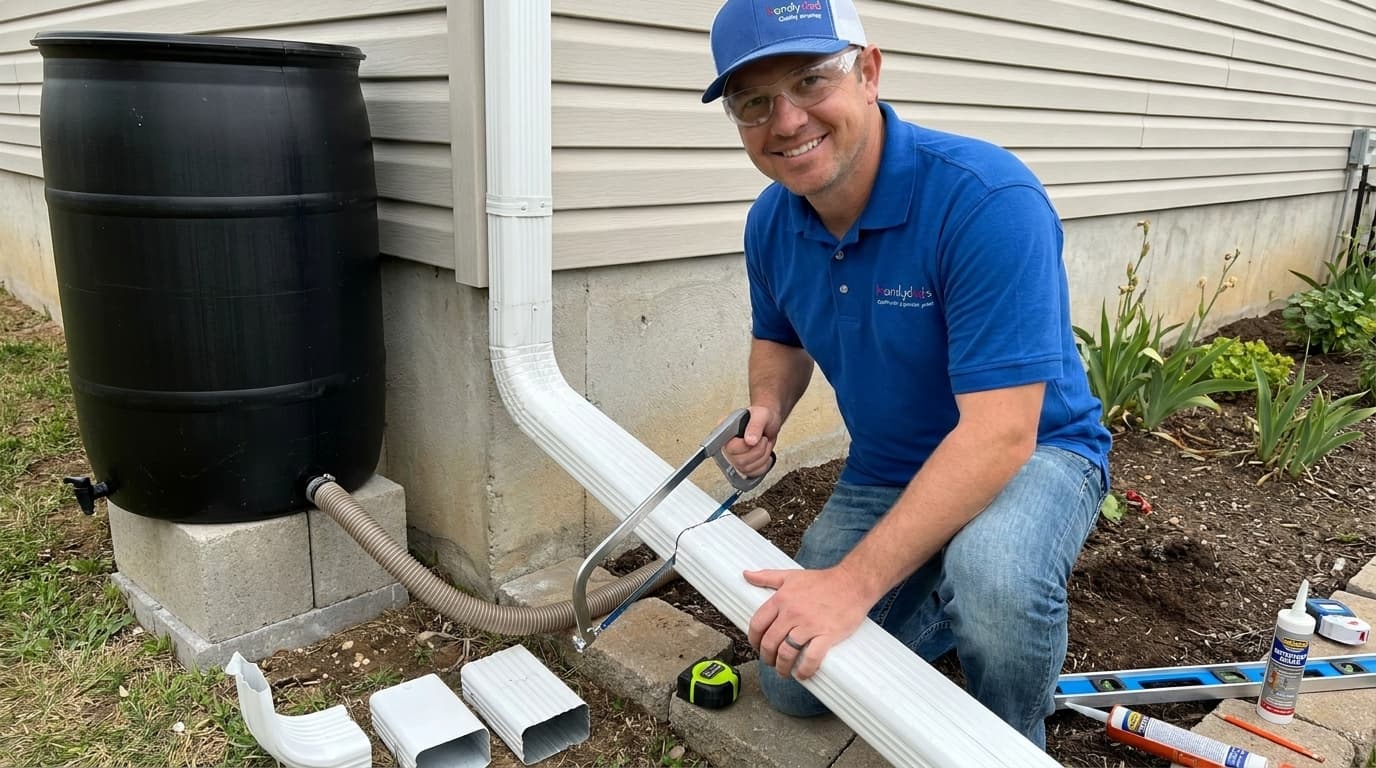
Installing a rain barrel system is a fantastic way to improve the sustainability of your home while caring for your landscape. This project allows you to collect free water from your roof that would otherwise simply wash away into the storm drains. Handydads believes that every homeowner can benefit from this simple addition to their outdoor maintenance routine. You will find that rainwater is often better for your plants because it lacks the chlorine and fluoride found in many city water supplies. By setting up a collection system, you are taking a proactive step toward environmental conservation and smarter home management.
Project Snapshot
This project is rated as easy and is suitable for beginners who want to explore green home improvements. You can expect to spend about two to three hours on the total installation process from start to finish. Handydads suggests having a helper nearby to assist with leveling the base and holding the downspout while you make your cuts. The total investment for materials is relatively low compared to the long term savings you will realize on your utility bills. Proper planning ensures that your new system will function efficiently for many years without requiring significant repairs or adjustments.
Tools and Materials
To get started, you will need a power drill with a variety of bits and a reliable hacksaw or a hole saw for cutting the downspout. A level is essential to ensure your base is flat and the barrel does not lean dangerously when it is heavy with water. You will also require a tape measure, a pencil for marking, and a pair of safety glasses to protect your eyes. The primary materials include a high quality rain barrel, a universal downspout diverter kit, and several concrete blocks for the foundation. Handydads also recommends having a flexible hose and some waterproof sealant on hand to ensure all connections are completely watertight.
Step-by-Step Instructions
To begin the process, you must select a location near a downspout that is close to the areas you plan to water most frequently. You should create a stable and level base using heavy concrete blocks to elevate the barrel and provide better gravity-fed water pressure. Carefully measure and mark your downspout at the height specified by the instructions provided with your specific diverter kit. Use a hacksaw or a hole saw to cut the downspout and install the diverter that will channel water directly into your barrel. Connect the barrel to the diverter using the provided tubing and ensure all seals are tight to prevent any unwanted leaks. Finally, install an overflow hose at the top of the barrel to direct excess water away from your home foundation during heavy storms.
From the Toolbox
I remember helping a neighbor set up three connected barrels for his massive vegetable garden last summer. He was tired of seeing his water bill spike during the dry months and wanted a more natural solution for his prize-winning tomatoes. We spent a Saturday morning leveling the ground and fitting the diverters to his existing gutter system. The look of satisfaction on his face when the first rainstorm filled those barrels was truly rewarding for both of us. Handydads always enjoys seeing how a small mechanical change can make such a big difference in a person's daily life.
Top 5 Mistakes
Even a simple project like this can go wrong if you do not pay attention to the small details during the setup. Many homeowners overlook the importance of a solid foundation or a proper overflow system when they first start out. Handydads has seen many instances where a barrel tipped over because it was placed on shifting soil or mulch. Avoiding these common pitfalls will save you time and prevent potential damage to your home exterior or landscaping. Taking a few extra minutes to double check your work will ensure that your rainwater collection system works perfectly from the very first storm.
- Placing the barrel on soft or uneven ground which can cause it to tip over when full.
- Forgetting to install a screen to keep mosquitoes and debris out of the standing water.
- Not elevating the barrel high enough to allow for easy gravity-fed hose usage.
- Neglecting the overflow valve which can lead to water pooling against the foundation.
- Failing to winterize the system by draining the barrel before the first hard freeze.
Tool and Material Recommendations
Choosing the right components for your rain collection system is vital for achieving long lasting results and minimal maintenance. You should always prioritize durability and ease of use when shopping for your barrel and diverter kit. Handydads recommends looking for materials that are specifically designed to withstand the elements and provide safe water for your plants. High quality products may cost slightly more upfront but they will perform better and last much longer than cheaper alternatives. Investing in the right tools and materials today will ensure that your gardening experience is both productive and eco friendly for years to come.
- High quality fifty gallon UV resistant rain barrel
- Universal downspout diverter kit with automatic overflow
- Heavy duty concrete landscaping blocks for a stable base
- Fine mesh stainless steel debris screen for the top inlet
- Lead free garden hose specifically rated for rain barrel connections
Quick Tips and Hacks
There are several clever ways to maximize the efficiency and appearance of your new water collection setup. Small adjustments can make the system easier to operate and help it blend into your existing landscape design more naturally. Handydads loves finding creative solutions that solve common problems like algae growth or limited storage capacity. By applying these simple hacks, you can customize your rain barrel to fit your specific needs and gardening style perfectly. These expert tips are designed to help you get the most out of your sustainable investment with very little extra effort.
- Paint your barrel to match your siding or hide it behind some tall decorative grasses.
- Use a dark colored barrel to prevent sunlight from entering and encouraging the growth of algae.
- Link multiple barrels together using a simple connector kit to increase your total storage capacity.
- Keep a small piece of window screen over the spigot to prevent fine sediment clogging.
- Check the level of your barrel periodically to ensure the weight hasn't caused shifting.