
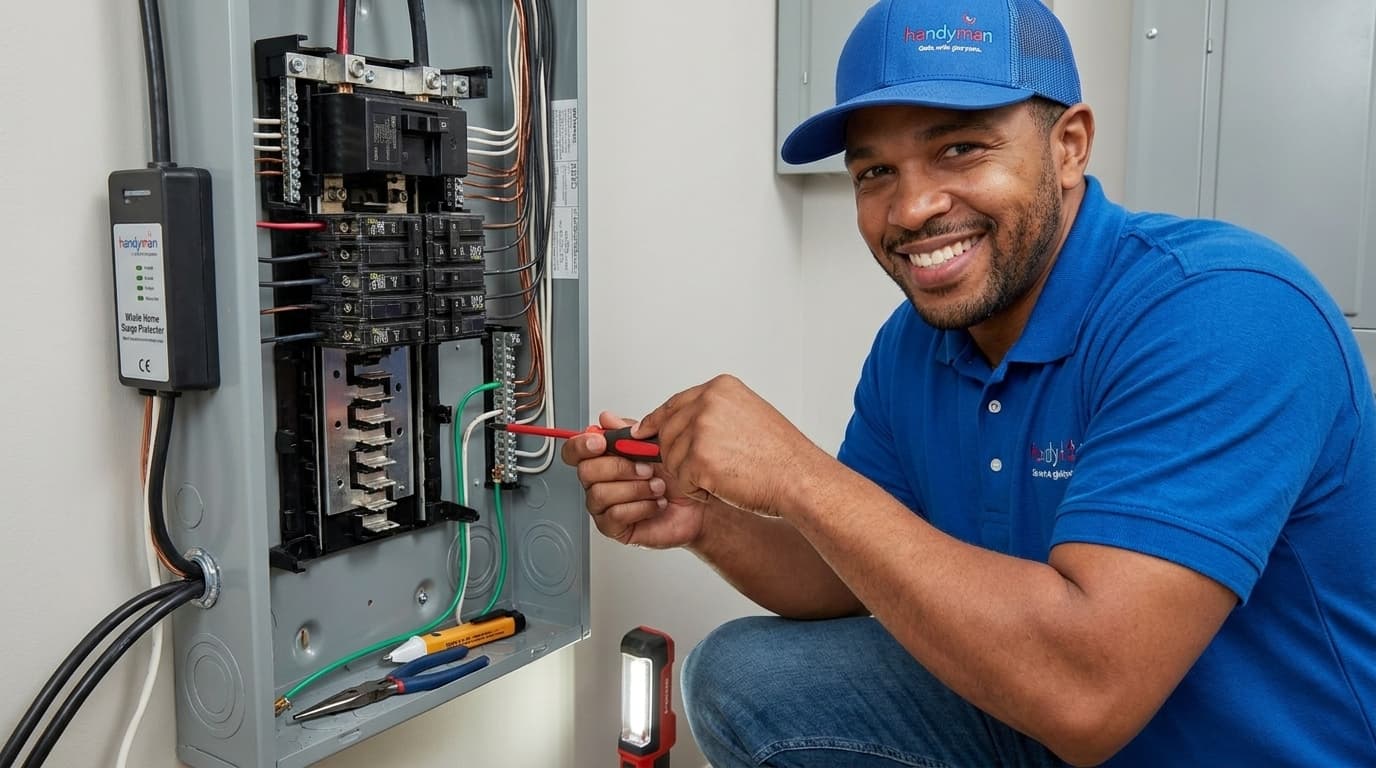
Safeguarding your home from electrical surges is a vital part of modern home maintenance for every property owner. Most people rely on simple power strips to protect their computers and televisions, but these devices often fail to stop large spikes from reaching your expensive appliances. A whole home surge protector is designed to intercept high voltage spikes directly at the main electrical service panel before they can travel through your house wiring. By installing this device, you create a robust first line of defense against lightning strikes and utility grid fluctuations that could otherwise cause thousands of dollars in damage. Handydads is here to guide you through the process of adding this essential safety feature to your electrical system safely and effectively.
Project Snapshot
Installing a whole home surge protector is an advanced project that requires a high level of comfort working inside your main electrical service panel. This project typically takes about ninety minutes to complete from start to finish if you have all your tools ready and accessible. The impact on your home security is incredibly high because it protects every single outlet and hardwired appliance simultaneously. You will need to ensure that you have open space in your breaker panel to accommodate a new double-pole breaker. Handydads always suggests consulting with a licensed professional if you feel unsure about working with live electricity at any point during this installation process.
Tools and Materials
You will need a whole home surge protection device that is compatible with your specific brand of electrical panel. A non-contact voltage tester is absolutely essential to ensure that the power is completely off before you begin touching any internal components. You should have a set of insulated screwdrivers including both Phillips and flat head varieties to handle the various terminal screws. A pair of wire strippers and needle-nose pliers will help you prepare the leads for a secure and clean connection. Finally, make sure you have a flashlight or a battery-powered work light since you will be turning off the main power to the house.
Step-by-Step Instructions
Installing a whole home surge protector starts with shutting off the main power and removing the panel cover to access the internal wiring. You must first mount the device to the side of the panel and thread the wires through a knockout hole to keep things organized. The white and green wires must be connected firmly to the neutral and ground bars respectively to ensure a proper path for excess voltage. You then install a new double-pole breaker and attach the black power wires from the surge protector to the breaker terminals. Finally, you snap the breaker into place, replace the panel cover, and restore power to the home while checking the indicator lights for proper operation.
From the Toolbox
I remember a summer storm several years ago that sent a massive power surge through a local neighborhood after a transformer blew nearby. One of my clients had just installed a whole home surge protector the month before after seeing a Handydads tutorial on home safety. While his neighbors were busy replacing fried refrigerators and ruined microwave ovens the next morning, his home remained perfectly operational without a single flickering light. He called me just to say how relieved he was that a small investment in hardware saved his entire kitchen full of high-end appliances. It is stories like this that remind us why preventative maintenance is the most important job for any dedicated homeowner.
Top 5 Mistakes
One of the biggest errors homeowners make is forgetting to verify that the power is truly off with a voltage tester before touching anything. Another common mistake is leaving the wire leads too long because excess length can actually decrease the speed at which the protector reacts to a surge. Some people fail to use a compatible breaker for their specific panel brand which can lead to a loose and dangerous connection. It is also a mistake to ignore the status lights on the device because they are the only way to know if the unit has been exhausted by a previous spike. Lastly, many DIYers do not tighten the terminal screws sufficiently which creates heat and increases the risk of an electrical fire inside the box.
Tool and Material Recommendations
When you are shopping for a surge protector, look for a model that has a high kiloamp rating to handle multiple large surges over its lifetime. Handydads suggests choosing a unit that includes a warranty for connected equipment as this provides an extra layer of financial security. You should also invest in a high-quality non-contact voltage tester from a reputable brand like Klein or Fluke for accurate readings. Insulated screwdrivers are a must for this job because they are specifically designed to prevent electricity from traveling through the tool to your hand. Using a headlamp can also be a great recommendation because it keeps both of your hands free while providing direct light into the dark panel box.
Quick Tips and Hacks
A great hack for this project is to use a piece of electrical tape to mark the wires before you disconnect them to avoid any confusion. You should always try to keep the surge protector as close to the main breaker as possible to provide the most direct path for protection. If your panel is crowded, you may need to rearrange some existing breakers to make room for the new double-pole unit required by the device. It is helpful to write the installation date on the side of the unit with a permanent marker for future maintenance tracking. Handydads also recommends checking your home grounding system to ensure that the surge protector has a clear path to divert excess energy into the earth.