
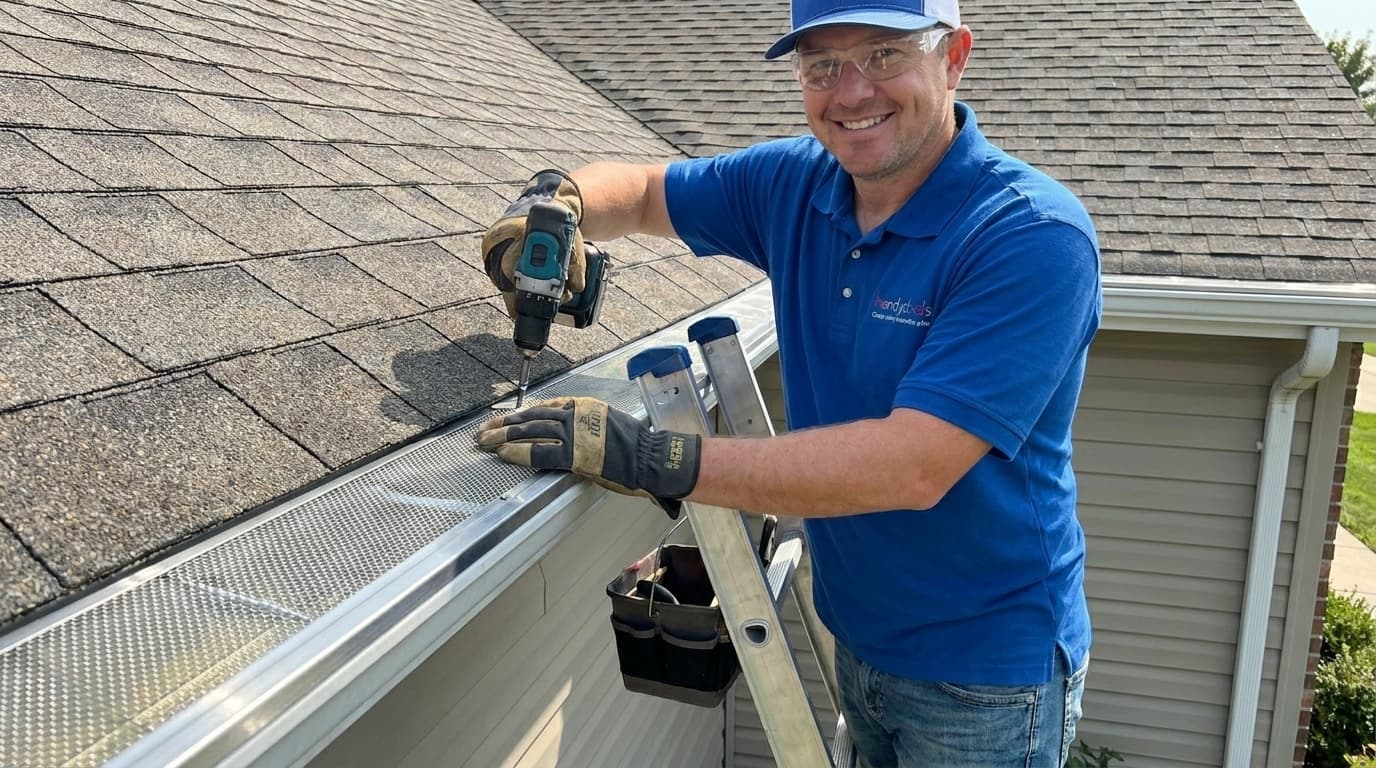
Maintaining your home involves many tasks but protecting your foundation remains a top priority for every homeowner. Clogged gutters can lead to significant water damage and expensive repairs over time. Installing gutter guards is a proactive way to keep debris out while ensuring rainwater flows freely through your drainage system. This project is a manageable weekend task that provides long-term peace of mind and reduces your annual maintenance chores. Handydads recommends this upgrade for anyone looking to safeguard their exterior walls and landscaping from overflow issues.
Project Snapshot
This installation typically takes a few hours depending on the total linear footage of your roofline. You will need to work from a ladder so safety remains the most important factor throughout the entire process. Most gutter guard systems are designed to snap or screw directly onto your existing gutters with minimal effort. This project significantly reduces the frequency of ladder climbs needed for seasonal cleaning. Handydads finds that homeowners who invest this time upfront save many hours of messy work in the future.
Tools and Materials
You will need a sturdy extension ladder with a stabilizer to prevent damage to your gutters. A pair of high quality tin snips is essential for cutting the guard material to fit your specific lengths. Gather a cordless drill with a hex head driver bit if your system requires mechanical fasteners. Safety equipment should include heavy duty work gloves and eye protection to guard against sharp metal edges. You also need a garden hose to flush out any existing debris before starting the installation.
Step-by-Step Instructions
Begin by thoroughly cleaning your existing gutters to remove all leaves, twigs, and built-up silt. Use a garden hose to check that the downspouts are clear and that water flows away from your house correctly. Start at one corner of your roof and measure the first section of gutter guard to be installed. Carefully slide the guard under the first layer of shingles or snap it onto the front lip depending on the product design. Secure the guard using the provided screws or clips to ensure it remains stable during high winds. Continue this process around the entire perimeter while overlapping the ends of the guards slightly to prevent gaps.
From the Toolbox
I once visited a client who was tired of climbing a ladder every single time a storm blew through their wooded lot. They had large oak trees that dropped massive amounts of debris throughout the entire year. We spent a Saturday morning installing high quality stainless steel mesh guards across their entire ranch style home. After a heavy rain the following week, the homeowner called to say the water was flowing perfectly into the downspouts. It was a simple afternoon of work that completely changed how they maintained their property forever.
Top 5 Mistakes
Many people forget to clean the gutters completely before they start the installation process. Some installers fail to overlap the guard sections which allows small debris to slip through the cracks. Using the wrong type of ladder or failing to use a stabilizer can lead to dangerous falls or dented gutters. It is a common error to ignore the pitch of the guards which can cause water to overshoot the gutter during heavy rain. Finally, some homeowners do not secure the guards tightly enough which leads to them blowing away during severe weather.
Tool and Material Recommendations
Look for micro-mesh gutter guards made from stainless steel or high-grade aluminum for the best longevity. A telescoping extension ladder offers the versatility needed to reach different roof heights safely. Invest in a pair of offset tin snips to make clean cuts in the metal or plastic guard material. A magnetic nut driver set for your drill will make handling small screws much easier while you are high on a ladder. Handydads suggests choosing a guard system that has a lifetime warranty against clogs and material failure.
Quick Tips and Hacks
Use a small plastic scoop to remove heavy debris from the gutters before you start rinsing with the hose. If you have a steep roof, consider using a fall protection harness for an extra layer of safety. Mark your cut lines with a permanent marker to ensure every piece fits perfectly around corners and downspout openings. Keep a small bucket attached to your ladder to hold your tools and screws so your hands remain free. Test the system immediately after installation by spraying water on the roof to see how the guards handle the flow.